
Bifacial Solar module
Bifacial Solar Module Dealer / Supplier in Dehradun
Bifacial Solar modules produce solar power from both sides of the panel. Whereas traditional opaque-backsheeted panels are monofacial, bifacial solar modules expose both the front and backside of the solar cells. When bifacial solar modules are installed on a highly reflective surface (like a white TPO roof or on the ground with light-colored stones), some bifacial module manufacturers claim up to a 30% increase in production just from the extra power generated from the rear.
A bifacial solar module is a type of solar panel that can capture sunlight from both its front and rear sides. Unlike traditional monofacial panels that only absorb light from the top, bifacial panels use transparent or semi-transparent backsheets or dual glass to allow reflected light from the ground or nearby surfaces to also generate electricity.
Bifacial solar modules are photovoltaic panels that can generate electricity from both the front and rear sides. Here are the key advantages and benefits of using bifacial modules:
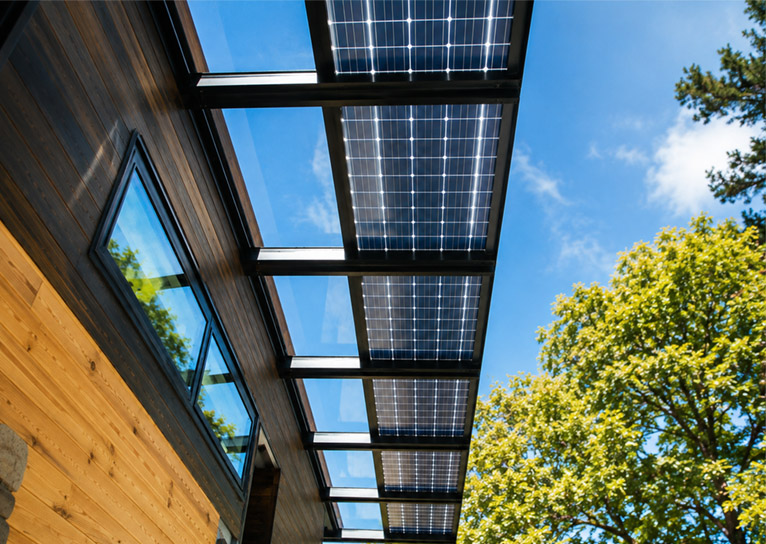
Advantages & Benefits of Bifacial Solar Modules
Bifacial solar modules capture sunlight from both the front and rear sides, helping improve energy generation and long-term solar performance.
Higher Energy Yield
Lower LCOE
Durability
Better Low-Light Performance
Longer Lifespan
Reduced Hot Spot Risk
Flexible Installation Options


Bifacial solar modules, unlike standard solar panels, are designed to capture sunlight on both sides, increasing overall energy production. They feature photovoltaic cells on both the front and back, allowing them to generate electricity from sunlight striking either surface. This design can result in up to a 30% increase in power output.
A bifacial solar cell (BSC) is any photovoltaic solar cell that can produce electrical energy when illuminated on either of its surfaces, front or rear. In contrast, monofacial solar cells produce electrical energy only when photons impinge on their front side. Bifacial solar cells can make use of albedo radiation, which is useful for applications where a lot of light is reflected on surfaces such as roofs. The concept was introduced as a means of increasing the energy output in solar cells
Everything You Need to Know About Bifacial Solar Modules
Find answers to common questions about bifacial solar modules, their benefits, installation requirements and energy generation.
A bifacial solar module is a type of solar panel that generates electricity from both sides. The front side captures direct sunlight, while the back side absorbs reflected sunlight from the ground or surrounding surfaces, increasing overall energy generation.
Traditional monofacial panels only capture sunlight from the front. Bifacial panels use transparent back sheets or glass to allow sunlight to reach the rear side, improving efficiency by approximately 5–30% depending on installation conditions.
- Higher energy yield (5–30% more than monofacial)
- Better performance in diffuse and low-light conditions
- Longer lifespan with double-glass design
- More efficient use of available space
- Lower cost per unit of energy over time
Bifacial solar panels perform best when installed in areas where sunlight can reach both the front and rear surfaces of the module.
- Highly reflective surfaces such as white rooftops
- Snow, sand or water surfaces
- Elevated mounting structures
- Open ground-mounted solar farms
- Rooftops with sufficient clearance
Yes. Bifacial modules can be installed on regular rooftops. However, the additional energy generated from the rear side depends on the surface below the panels.
Reflective or light-colored rooftops can provide greater rear-side energy generation, while dark rooftops generally provide a lower rear-side gain.
On average, bifacial solar modules can generate approximately 5–20% more energy than traditional panels. Under ideal conditions, such as snow-covered ground or highly reflective surfaces, the additional energy generation may reach up to 30%.
Why Choose S & N Merchandiser Dehradun?
Choose reliable bifacial solar solutions designed to maximize energy generation, improve long-term performance and make better use of available solar space.