Solar System
The solar system is an integrated solution that converts sunlight into usable electricity through photovoltaic (PV) panels. It is one of the cleanest and most sustainable sources of renewable energy, helping households, businesses, and industries reduce electricity costs and carbon footprint.
What is a Solar System?
A solar system (also known as a solar power system or solar energy system) consists of solar panels, an inverter, batteries (optional), and other components that work together to generate and supply electricity.
Sunlight is absorbed by the panels and converted into direct current (DC). The inverter then changes this DC into alternating current (AC), which powers
homes, offices, and industries.
Main Components of a Solar System
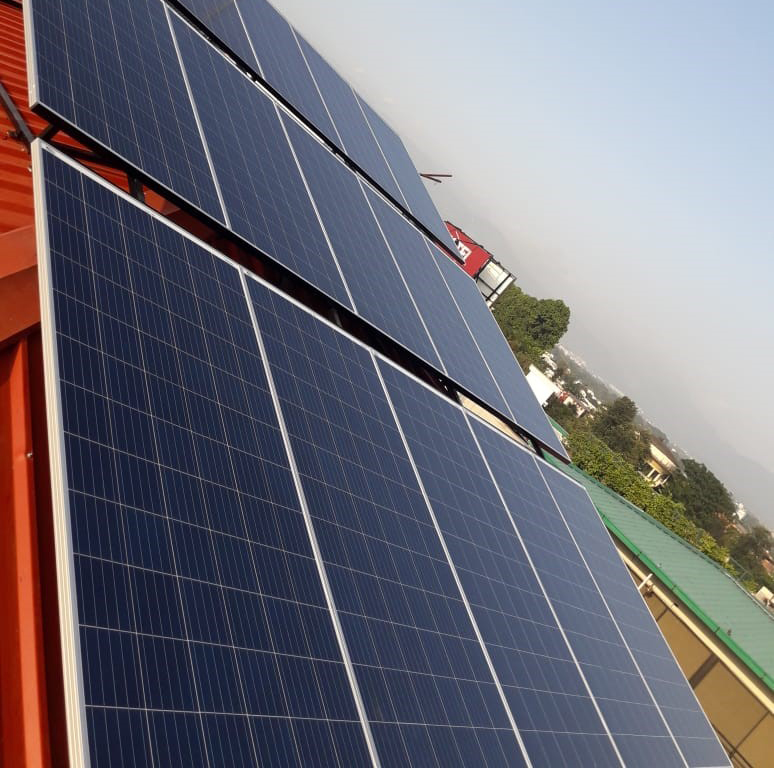
Every solar system is built with essential components that ensure smooth functioning and high efficiency. The most important part is the solar panel, which captures sunlight and generates electricity. These panels come in different types such as monocrystalline (known for high efficiency and premium performance), polycrystalline (affordable and commonly used), and thin-film panels (lightweight and flexible for special applications). The inverter is the brain of the solar system, responsible for converting DC power into usable AC power. In some setups, batteries are added to store surplus energy, ensuring an uninterrupted power supply during nighttime or power cuts. Supporting components like mounting structures, charge controllers, cables, and switches also play an important role in ensuring durability, safety, and optimum output of the system.
Components of a Solar System
1- Solar Panels
Capture sunlight and convert it into electricity.
Types:
(i) Monocrystalline (high efficiency)
(ii) Polycrystalline (cost-effective)
(iii) Thin-film (lightweight, flexible)
2- Inverter
Converts DC into AC for household/industrial use.
Types:
(i) String Inverter
(ii) Micro Inverter
(ii) Hybrid Inverter
3- Solar Batteries (Optional)
Store extra electricity for night-time or backup use.
Types:
(i) Lead-Acid
(ii) Lithium-Ion
4- Mounting Structure
(i) Keeps solar panels in place at the right angle.
(ii) Can be rooftop, ground-mounted, or solar carports.
Solar Charge Controller
(i) Regulates voltage & current to protect batteries.
Cables & Accessories
(i) Ensures safe and efficient transmission of electricity.
Types of Solar Systems
On-Grid Solar System
(i) Connected to the electricity grid.
(ii) Excess power is exported, reducing bills.
(iii) No batteries required.
Off-Grid Solar System
(i) Independent system with batteries.
(ii) Works in remote areas without electricity.
(iii) Provides 24×7 power backup.
Hybrid Solar System
(i) Combination of On-Grid + Off-Grid.
(ii) Uses both grid connection and batteries.
(iii) Ensures backup and savings.
Benefits of a Solar System
(i) Reduces electricity bills by up to 80%
(ii) Eco-friendly & sustainable
(iii) Low maintenance and long lifespan (25+ years)
(iv) Increases property value
(v) Government subsidies & net metering available
Applications of Solar Systems
(i) Residential Homes – Power for appliances, lights, and cooling.
(ii) Commercial Buildings – Offices, shopping complexes, hotels.
(iii) Industrial Use – Factories, warehouses, cold storage.
(iv) Agriculture – Solar water pumps, irrigation systems.
(v) Institutions – Schools, hospitals, NGOs.
Solar System Installation Process
(i) System design & component selection
(ii) Installation of mounting structures & panels
(iii) Wiring, inverter, and battery setup
(iv) Testing & commissioning
(v) Net metering approval (if on-grid)
Why Choose Think Solar Energy?
(i) Certified products & expert team
(ii) Tailored solutions for homes, businesses, and industries
(iii) End-to-end service: Design → Installation → Maintenance
(iv) High-performance solar panels with warranty
(v) 24/7 customer support